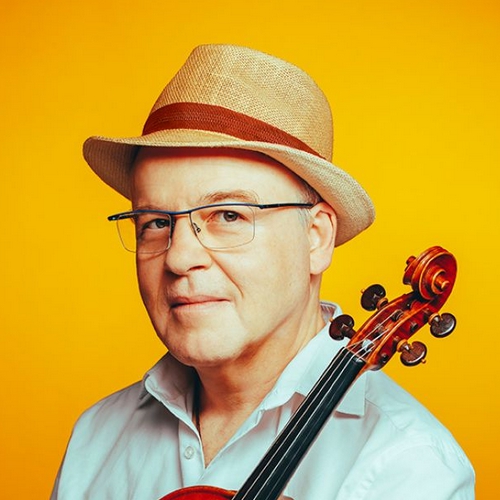

Tribute to Williams and Zimmer
—Orquestra Simfònica del Vallès & Salado
- Nadal al Palau
- Musical Box
6December2026
Sunday
17:30
Concert Hall
At Christmas, Barcelona fills with lights, movement and that strange conviction that, for a few days, everything should be a little more beautiful. The Palau de la Música Catalana and the Orquestra Simfònica del Vallès (OSV) want to provide the soundtrack to this good intention with a range of different approaches, because there is no single way to celebrate Christmas. There are seven to choose from! Not everyone celebrates the festive season in the same way. Some seek the magic of childhood; others prefer the excitement of cinema, need a Viennese waltz to start the year, embrace the timeless truths of the great classics, or cannot imagine a celebration without an electric guitar. Whatever your style, as the Palau’s Christmas slogan proclaims: Music is our tradition. Let’s share it!
The Orquestra Simfònica del Vallès is a unique orchestra, founded nearly forty years ago. Its musicians and staff are also owners of the company and, as such, are leading figures in their own project. This self-managed model within the social economy has given them the freedom to explore new formats, take artistic risks and bring symphonic music to a wide range of audiences without compromising musical rigour or quality. Respecting tradition does not mean repeating the same formulas; it means knowing how to renew them without losing their essence. This year’s Nadal al Palau programme is a fine example.
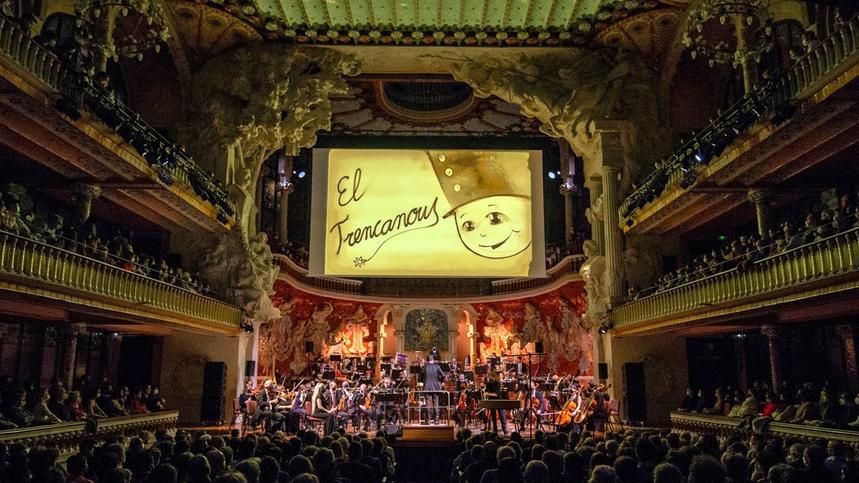
It takes only the opening bars of Tchaikovsky’s The Nutcracker for us to rediscover, for a few moments, the way we saw the world as children. It is a chance to discover that classical music needs no complicated explanations to enchant young listeners; someone simply has to open the door for them. The OSV presents a version that combines the ballet suite with narration in Catalan and sand illustrations, created and projected live. As the orchestra plays, the images appear and disappear before our eyes. A story told with words, music and a handful of sand.
Imagine closing your eyes and suddenly seeing Darth Vader. Or hearing the music from Gladiator and sensing, beyond the Palau’s doors, the roar of Rome and the dust rising from the arena.
John Williams and Hans Zimmer have achieved something extraordinary: writing music we recognise before we remember which film it belongs to. With voice actor Lluís Posada as our guide, we will travel through worlds such as Star Wars, Schindler’s List, Gladiator, Pirates of the Caribbean and Interstellar. Cinema tells stories through images, but often it is the music that makes sure we remember them.
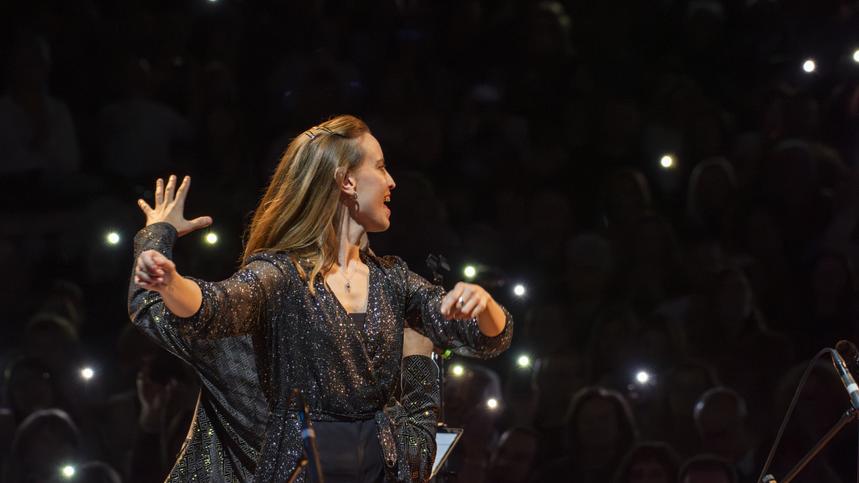
Starting the year with a Viennese waltz is a tradition that has weathered fashions, wars and changes to the calendar, while retaining its power to put us in a good mood. We know how to enjoy this Central European ritual in the Mediterranean, too. This time, under the direction of Isabel Rubio, it comes with a celebration of dance, elegance and good humour.
This music has an admirable gift: even the most serious people can feel, for a moment, tempted to dance. And beginning the year with a little lightness is a wiser choice than making a long list of resolutions that most of us will abandon before February.
Who decided that a symphony orchestra should only play classical music? Probably someone who had never heard Queen backed by brass and percussion, or recognised the musical — and symphonic — potential of The Beatles, Pink Floyd, ABBA, Deep Purple and Elvis Presley. These songs are part of the memories of several generations, and take on a new dimension when dressed in the colours of a symphony orchestra.
There is no need to be solemn here. Music is also for celebrating, letting yourself be carried away and, if you like, discovering that Beethoven and Freddie Mercury may have had more in common than we imagine.
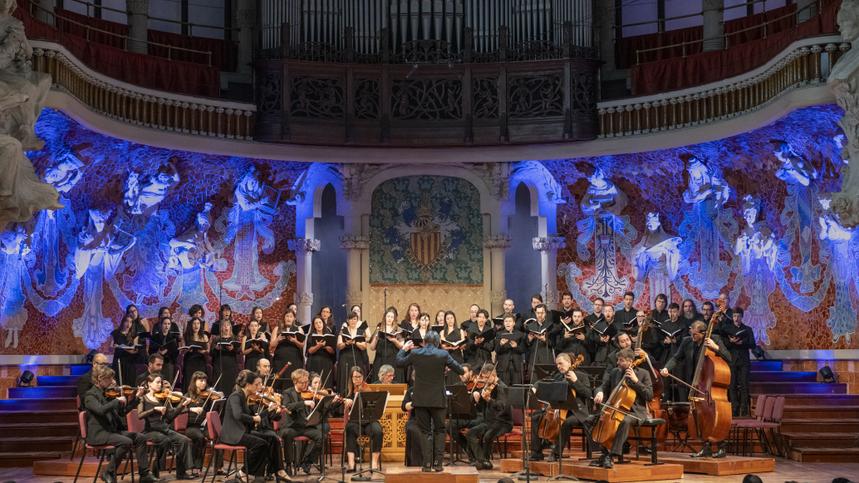
Nearly three centuries after its premiere, Handel’s Messiah still holds a special place among the great works of Western music. Few compositions have brought beauty, emotion and spiritual feeling together so powerfully. With the Baroque orchestra Vespres d’Arnadí and the Cor de Cambra de Granollers, this great oratorio returns to the Palau with all the delicacy of its arias and the impressive power of its choruses. And, of course, the moment arrives when the “Hallelujah” bursts forth.
Music that seems written to remind us that the human voice, when joined by many others, can reach a greatness that is hard to explain.
Christmas has a memory of its own. Music made of ancient voices, songs learned by the fireside and melodies passed down through generations, still carrying the scent of our roots.
Joan Lamote de Grignon knew how to gather this legacy and give it new grandeur in La Nit de Nadal, an oratorio in which the simplicity of Catalan folk melodies is clothed in all the richness and splendour of the symphony orchestra.
Under the direction of Noemi Pasquina, with the children’s and adult choirs of the Orfeó Gracienc and Coral Cantiga, the OSV brings back this work in a participatory concert that also invites the audience to sing.
Some music belongs not only to those who wrote it, but to an entire people. The best way to preserve it is to keep it alive in everyone’s voice.
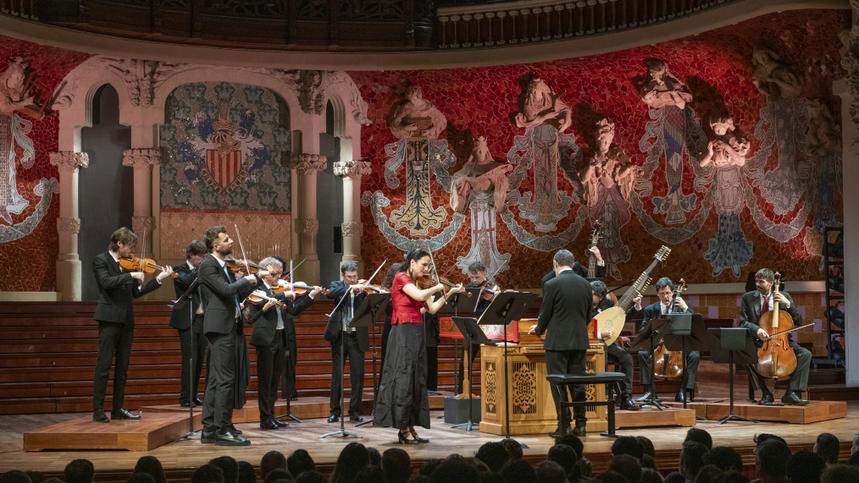
Some music seems to spring from the earth itself: from the rustling of trees, birdsong and the air changing its scent with the seasons. Antonio Vivaldi knew how to turn this whole world into music. In The Four Seasons, spring bursts forth with the joy of the first sunny days, summer flares with the fury of storms, autumn celebrates the abundance of the harvest, and winter makes us feel the cold slipping in through the windows.
Four concerts, like four little poems, full of life, colour and the boundless imagination that great artists find in the simplest things. With Ferran Sylvan James on violin and the Baroque orchestra Vespres d’Arnadí, conducted by Dani Espasa at the harpsichord, the Palau will fill with Vivaldi’s soundscapes.
The seasons pass, the years slip by and the world keeps turning. But some music has the gift of making us feel, every time we hear it, that spring has just begun.
A story by Tchaikovsky, John Williams’s galaxies, New Year’s waltzes, Queen’s guitars, Handel’s “Hallelujah”, Lamote de Grignon’s Christmas melodies and Vivaldi’s The Four Seasons. At first glance, they may not seem to have much in common.
But all this music speaks, in its own way, about us: our memories, emotions and celebrations, and that very human need to share something worthwhile. It comes with the certainty that music does not ask where you come from or what you usually listen to. It simply invites you in. Because, as we say at the OSV, music does not belong to those who make it, but to those who need it.
Tribute to Williams and Zimmer
—Orquestra Simfònica del Vallès & Salado
6December2026
Sunday
17:30
Concert Hall

Symphonic pop-rock
—Orquestra Simfònica del Vallès & Rubio
8December2026
Tuesday
17:30
Concert Hall
The Four Seasons by Vivaldi
—Vespres d’Arnadí, James & Espasa
13December2026
Sunday
21:30
Concert Hall

Nascent Light. Advent and Christmas
—Integral work for organ by J.S. Bach III
15December2026
Tuesday
19:30
Barcelona - Sant Felip Neri Oratory

El pessebre by Pau Casals
—Cor Madrigal, Franz Schubert Filharmonia & Colomer
15December2026
Tuesday
20:00
Concert Hall

El Messies by Händel
—RIAS Kammerchor, AKAMUS & Doyle
16December2026
Wednesday
20:00
Concert Hall

Collegium Vocale Gent & Herreweghe
—Christmas Oratorio by Bach
18December2026
Friday
19:00
Concert Hall

Waltz and dance festival
—Orquestra Simfònica del Vallès & Puig
19December2026
Saturday
18:30
Concert Hall
The Four Seasons by Vivaldi
—Vespres d’Arnadí, James & Espasa
19December2026
Saturday
21:30
Concert Hall

La Nit de Nadal by Joan Lamote de Grignon
—Orquestra Simfònica del Vallès & Pasquina
20December2026
Sunday
18:30
Concert Hall

A Nocte Temporis & Van Mechelen
—Salvat Foundation Christmas Concert
21December2026
Monday
19:00
Concert Hall
The Nutcracker by Tchaikovsky
—Orquestra Simfònica del Vallès
25December2026
Friday
19:00
Concert Hall

Sant Esteve Concert
—Cors de l’Orfeó Català & Cor de Cambra del Palau
26December2026
Saturday
19:00
Concert Hall
New Year's Concert
—Orquestra Simfònica del Vallès & Rubio
28December2026
Monday
12:00
Concert Hall
New Year's Concert
—Orquestra Simfònica del Vallès & Rubio
29December2026
Tuesday
12:00
Concert Hall
New Year's Concert
—Orquestra Simfònica del Vallès & Rubio
31December2026
Thursday
12:00
Concert Hall
New Year's Concert
—Orquestra Simfònica del Vallès & Rubio
1January2027
Friday
21:00
Concert Hall
The Nutcracker by Tchaikovsky
—Orquestra Simfònica del Vallès
2January2027
Saturday
12:00
Concert Hall
New Year's Concert
—Orquestra Simfònica del Vallès & Rubio
2January2027
Saturday
18:00, 21:00
Concert Hall
Messiah by Händel
—Vespres d’Arnadí, Cor de Cambra de Granollers & Puig
3January2027
Sunday
12:00
Concert Hall
New Year's Concert
—Orquestra Simfònica del Vallès & Rubio
3January2027
Sunday
18:00, 21:00
Concert Hall
The Nutcracker by Tchaikovsky
—Orquestra Simfònica del Vallès
4January2027
Monday
18:00
Concert Hall
The Four Seasons by Vivaldi
—Vespres d’Arnadí, James & Espasa
4January2027
Monday
21:00
Concert Hall
New Year's Concert
—Orquestra Simfònica del Vallès & Rubio
5January2027
Tuesday
12:00
Concert Hall
Tribute to Williams and Zimmer
—Orquestra Simfònica del Vallès & Salado
6January2027
Wednesday
19:00
Concert Hall
New Year's Concert
—Orquestra Simfònica del Vallès & Rubio
8January2027
Friday
18:00
Concert Hall
The Four Seasons by Vivaldi
—Vespres d’Arnadí, James & Espasa
8January2027
Friday
21:00
Concert Hall
The Nutcracker by Tchaikovsky
—Orquestra Simfònica del Vallès
9January2027
Saturday
12:00
Concert Hall
New Year's Concert
—Orquestra Simfònica del Vallès & Rubio
9January2027
Saturday
18:00
Concert Hall
Messiah by Händel
—Vespres d’Arnadí, Cor de Cambra de Granollers & Puig
10January2027
Sunday
12:00
Concert Hall
The Four Seasons by Vivaldi
—Vespres d’Arnadí, James & Espasa
10January2027
Sunday
18:00
Concert Hall