Visit the Palau
One of the most distinctive expressions of Modernism
Located in the historic Sant Pere quarter, in the heart of Barcelona.
This building by Lluís Domènech i Montaner brings together architecture, sculpture, music and the decorative arts in perfect harmony.
The interior of the Palau, bathed in natural light filtering through its stained glass, is one of the city’s great heritage treasures. Its richly decorated façade, with its extraordinary ornamental detail, captivates both visitors who step inside and passers-by who pause to admire it.
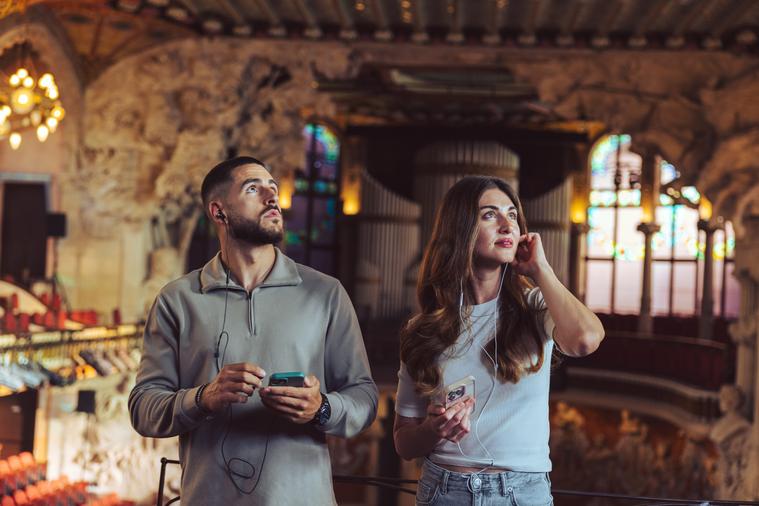
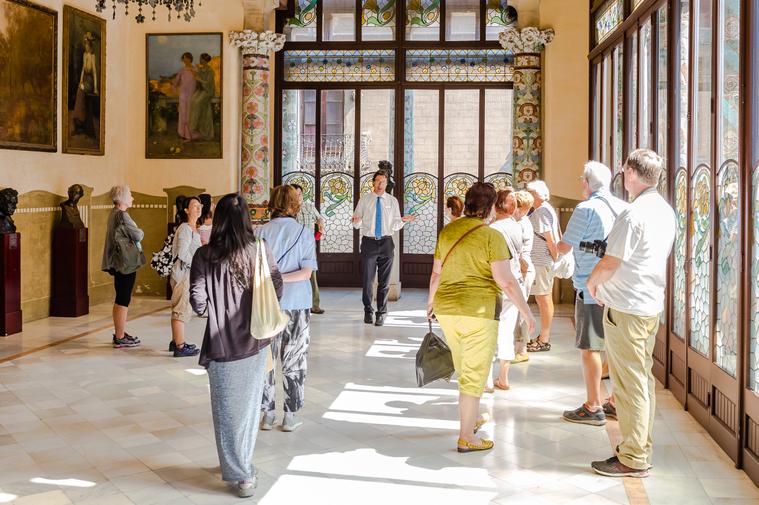
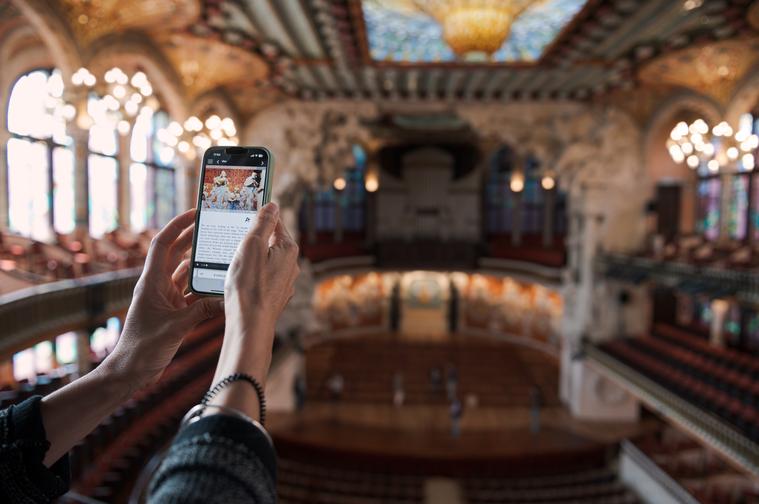
Through a range of visit options, the Palau opens its doors to the world, inviting people to explore its most remarkable spaces and uncover the secrets of its architecture and decoration.
History of the Palau de la Música
The Palau de la Música Catalana was built between 1905 and 1908 by Lluís Domènech i Montaner as the headquarters of the Orfeó Català, funded through public subscription. It stands in the Sant Pere quarter, one of Barcelona’s most characterful areas.
UNESCO World
Heritage Site
Heritage Site
The Palau de la Música Catalana is an architectural jewel of Catalan modernism and the only concert hall to have been declared a UNESCO World Heritage Site (4 December 1997). Today, it is a key venue in Catalonia’s musical and cultural life, as well as a deeply symbolic landmark for the community.
The Concert Hall
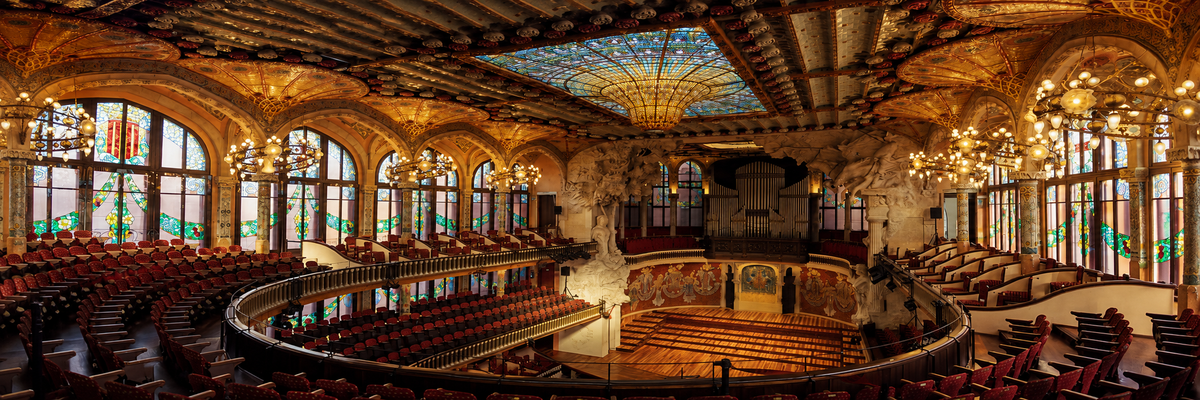
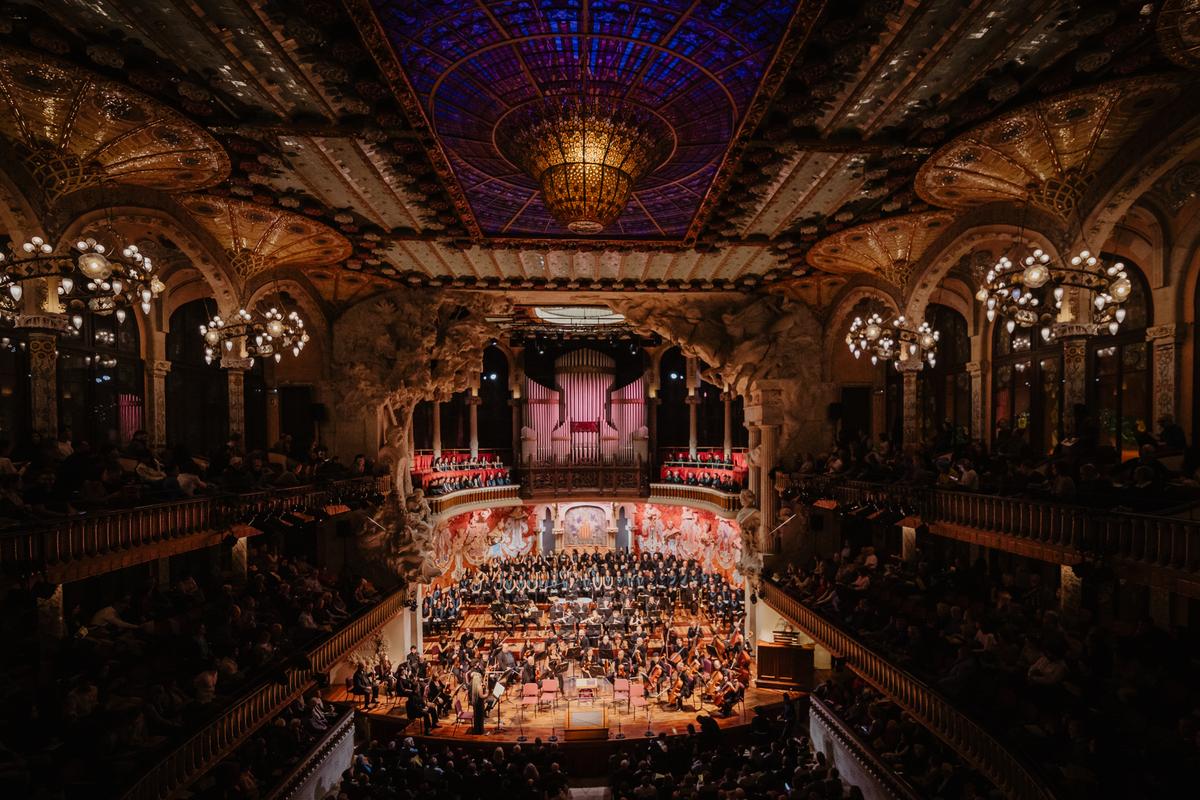
The Concert Hall at the Palau–one of the most distinctive in the world– has been at the heart of Barcelona’s musical life for over a century, hosting both national and international performances, including world premieres. It remains a benchmark venue for symphonic and choral music.
Crowned by a central skylight representing the sun and presided over by the organ on stage, the hall is filled with natural light.
Mystical and paradoxical, the hall features many sculptural elements such as the muses surrounding the stage, Wagner’s Valkyries emerging from the ceiling, and busts of Anselm Clavé and Ludwig van Beethoven. Decorative motifs of flowers, palm trees and fruit complete this unique space.
Orfeó Català Rehearsal Hall
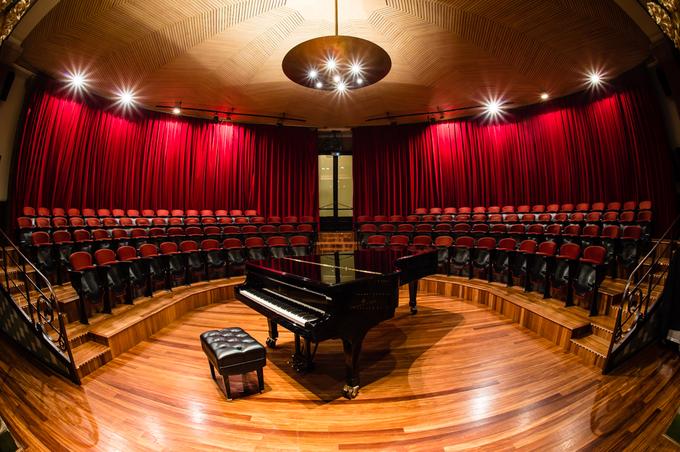
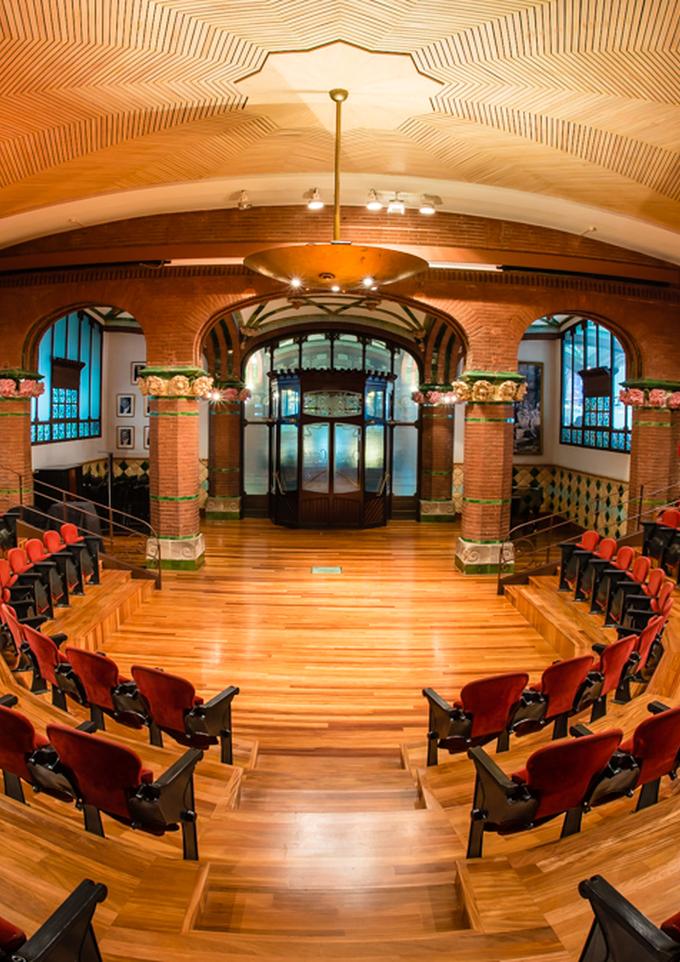
Another hidden gem within the Palau is the Orfeó Català Rehearsal Hall, an intimate and welcoming space used for small-scale concerts, talks and rehearsals. It also houses the foundation stone laid in 1905.
With its semicircular layout mirroring the Concert Hall above, the room is characterized by its large columns, stained glass and decorative features typical of Catalan Modernism.
The façade
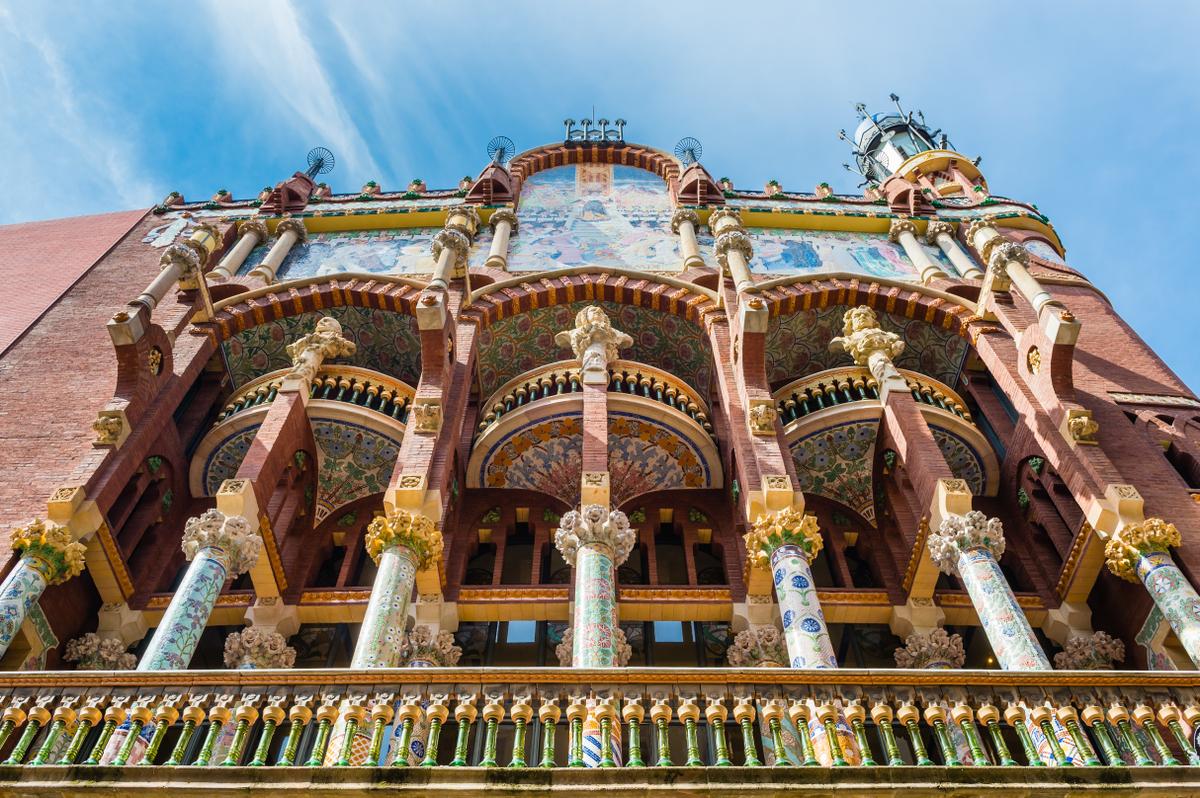
The façade of the Palau, located on Carrer de Sant Pere Més Alt, was the building’s original entrance until 1989. At the corner of Carrer d’Amadeu Vives stands the sculptural group La cançó popular catalana, by artist Miquel Blay, reproduced on a larger-than-life scale by Frederic Bechini. This composition depicts Saint George beneath a central female figure portrayed as a great figurehead, symbolising music, surrounded by other figures representing different social groups: a sailor, peasants, and old man and children. It is considered one of Blay’s masterpieces, notable for its social sensitivity and harmonious composition. As recorded in an inscription at the foot of the sculpture, it was funded by the Marquis of Castellbell (Joaquim de Càrcer i d’Amat) and inaugurated on 8 September 1909.
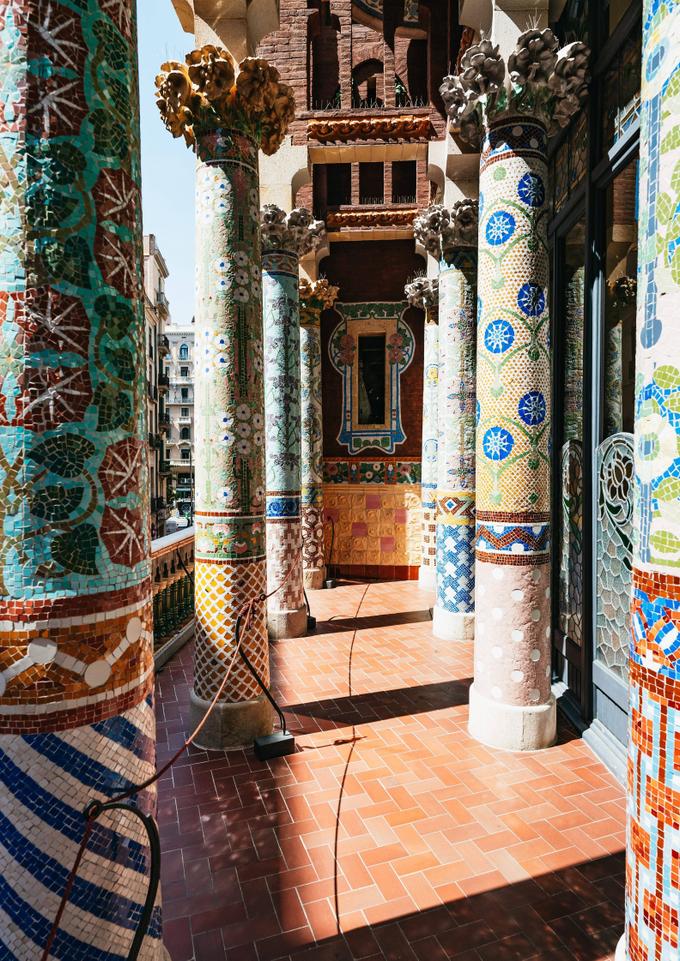
The complexity of the angular façad, set along two narrow streets, makes it difficult to take in the ensemble as a whole. Other notable architectural elements on the exterior of the Palau include the arches with large red-brick and ceramic columns. Two of these originally housed the ticket offices. On the first floor, a balcony runs along the façade, lined with fourteen columns arranged in pairs and covered in mosaic, each with a different design.
On the second floor, busts of musicians created by Eusebi Arnau are set on columns: from left to right, Giovanni Pierluigi da Palestrina, Johann Sebastian Bach and Ludwig van Beethoven. Beyond the sculptural group at the corner stands the bust of Richard Wagner, now located on Carrer d’Amadeu Vives.
At the top of the façade of the Palau de la Música, a large mosaic pediment by Lluís Bru symbolises the Orfeó’s flag, designed by Antoni Maria Gallissà. At its centre, a queen presides over a celebration with a spinning wheel, alluding to La Balanguera, a poem by Joan Alcover, set to music by composer Amadeu Vives, one of the works most frequently performed by the Orfeó and, since 1996, the official anthem of Mallorca.
Sala Lluís Millet
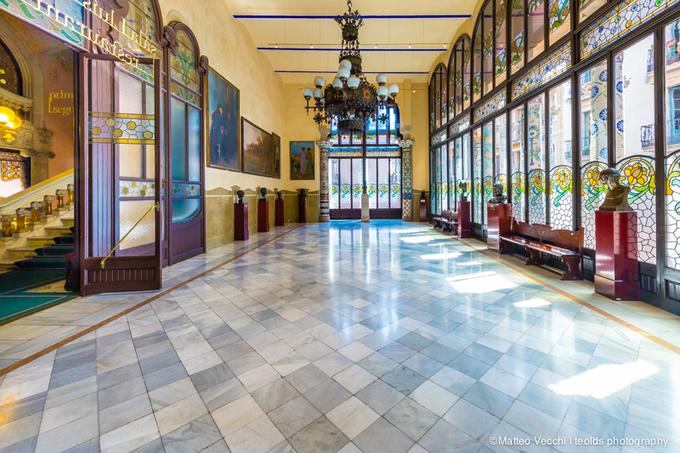
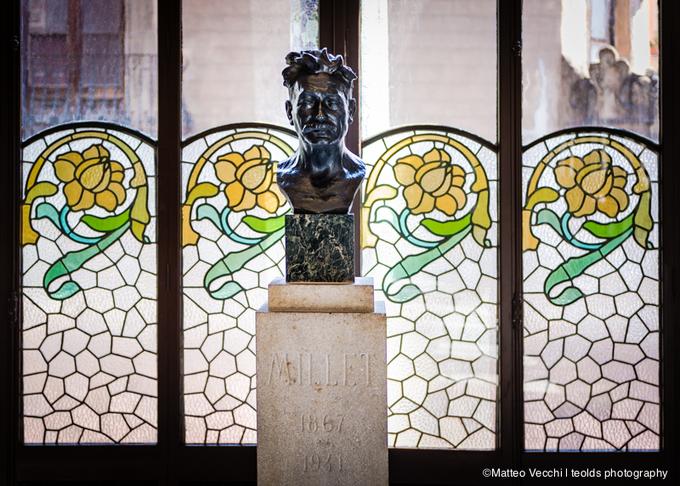
The Sala Lluís Millet is one of the Palau’s most elegant spaces. A grand salon conceived for relaxation and social gatherings, dedicated to Maestro Millet, the founder of the Orfeó Català. Spanning two storeys, the room is enclosed by large stained-glass windows with floral motifs, creating a striking visual effect. Beyond them lies a balcony with a distinctive double colonnade, rich in colour and ornamentation.
Foyer
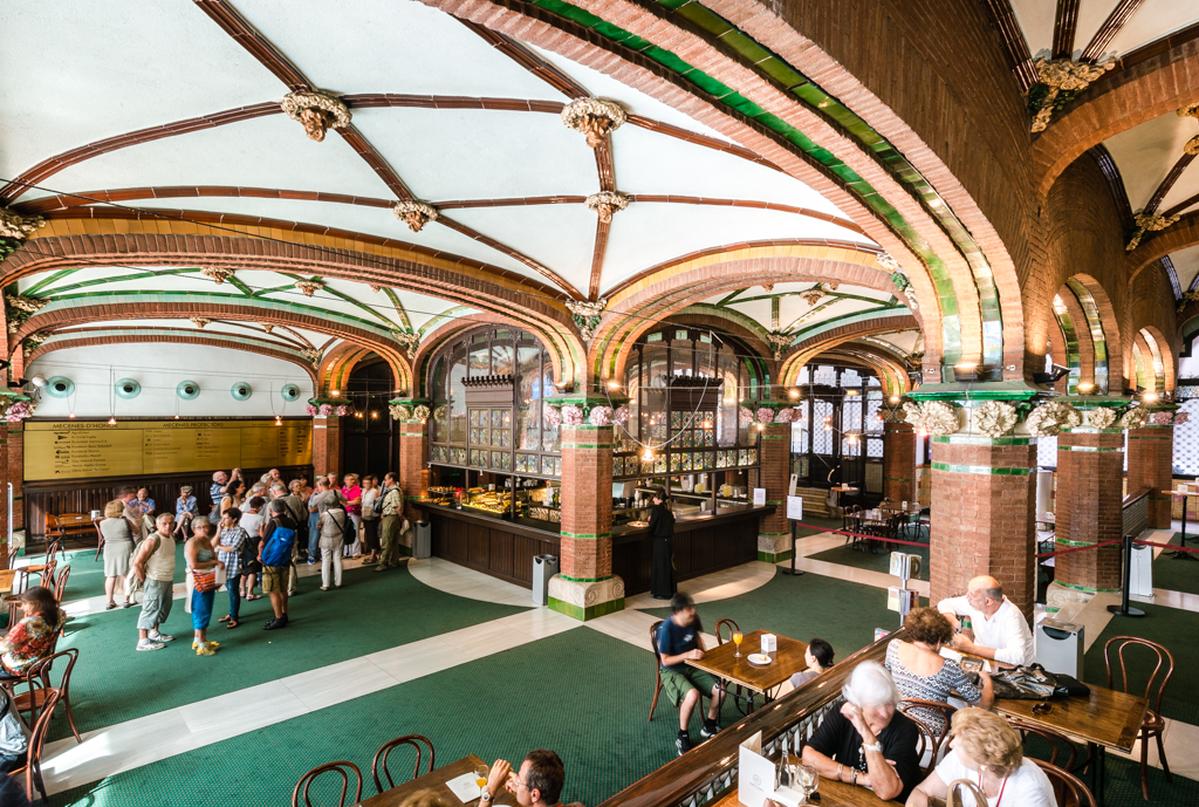
The Palau Foyer is another exceptional space, capable of accommodating large numbers of visitors both during performances and as an independent café-restaurant. Its wide brick arches, combined with green glazed ceramics and floral decorative elements, give it a distinctive and singular character.
The architect and the artists
The Palau de la Música was conceived as a synthesis of the arts. Lluís Domènech i Montaner worked closely with ceramists, sculptors, stained-glass artists and other craftspeople to bring together the decorative techniques that define Catalan modernism, creating a space where function and beauty coexist.
Catalan modernism
Plan your visit
Discover the Palau de la Música at your own pace or with the guidance of our experts.