Visit the Palau
Schools
School visits to the Palau de la Música Catalana
School visits to the Palau de la Música Catalana are conceived as an educational tour that promotes observation, critical thinking and cultural development for students of different educational levels.
The school visit to the Palau allows students to discover a key landmark of Catalan modernism, along with its cultural context and the significance of the movement in the history of Catalonia. It offers a way of understanding society through architecture from an educational perspective. The tour is led by a specialist guide and tailored to primary, secondary and upper secondary education, integrating content from history, art, social sciences and music.
What does the visit include?
The school visit includes a guided tour of the Palau’s main spaces with explanations adapted to the educational level.
It also introduces Catalan modernism architecture, the history of the building and the city, and its current cultural use.
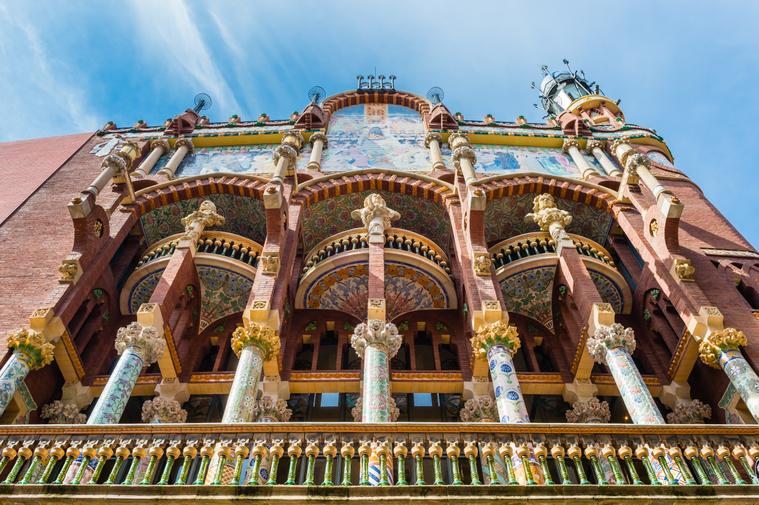
The Palau façade
The Palau’s intricate façade features a wealth of allegorical figures, sculptures and architectural elements characteristic of Catalan modernism.
On the first floor, a balcony runs along the façade, supported by fourteen paired columns decorated with mosaic, each with a unique design. On the second floor are busts of musicians by Eusebi Arnau: from left to right, Palestrina, Bach and Beethoven; beyond the sculptural group on the corner stands the bust of Wagner, now located on Carrer d’Amadeu Vives. The façade is crowned by a large mosaic pediment by Lluís Bru.
At the corner, the sculptural group La cançó popular catalana by Miquel Blay depicts Saint George beneath a central female figure, an allegory of music, surrounded by characters representing a sailor, peasants, an elderly man and children.
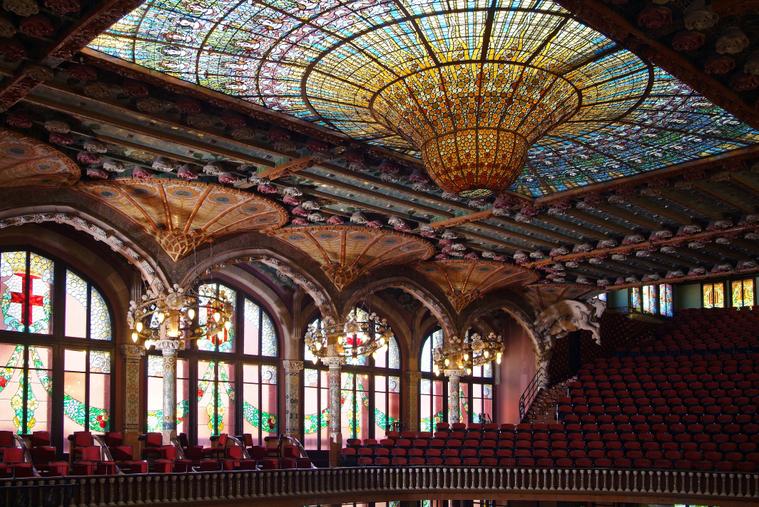
Concert Hall
This century-old hall has hosted some of Barcelona’s most important musical events throughout its history.
Dominated by the organ above the stage and crowned with a central skylight representing the sun, the hall is filled with natural light.
Both mystical and striking, it is rich in figures and symbolic detail: the muses surrounding the stage, Wagner’s Valkyries emerging from the ceiling, a bust of Anselm Clavé on one side and one of Beethoven on the other, alongside elements drawn from nature such as flowers, palm trees and fruit.
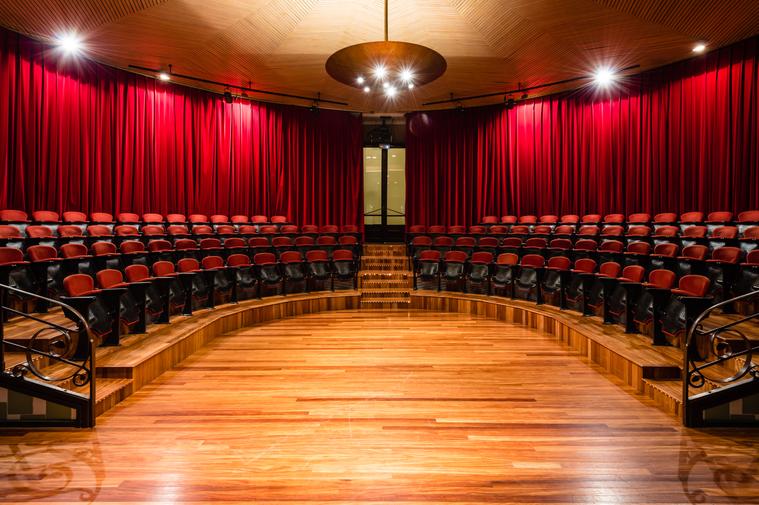
Orfeó Català Rehearsal Room
A unique space where the choirs of the Orfeó Català rehearse, and where small-scale concerts and events are also held.
This room is home to the foundation stone laid in 1905 at the start of the Palau’s construction. It features a semicircular seating arrangement, reflecting the half-moon shape of the Concert Hall stage located directly above.
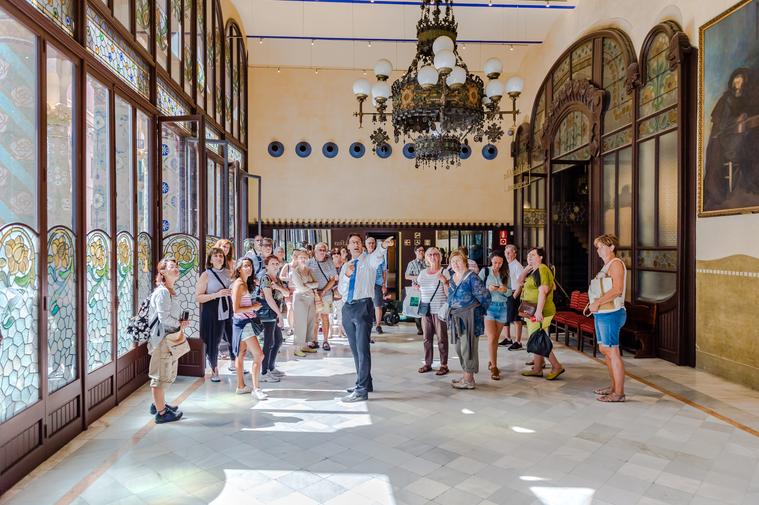
Lluís Millet Hall
The grand hall, dedicated to the founder of the Orfeó Català, is adorned with beautiful stained glass and opens to a balcony richly decorated with mosaics.
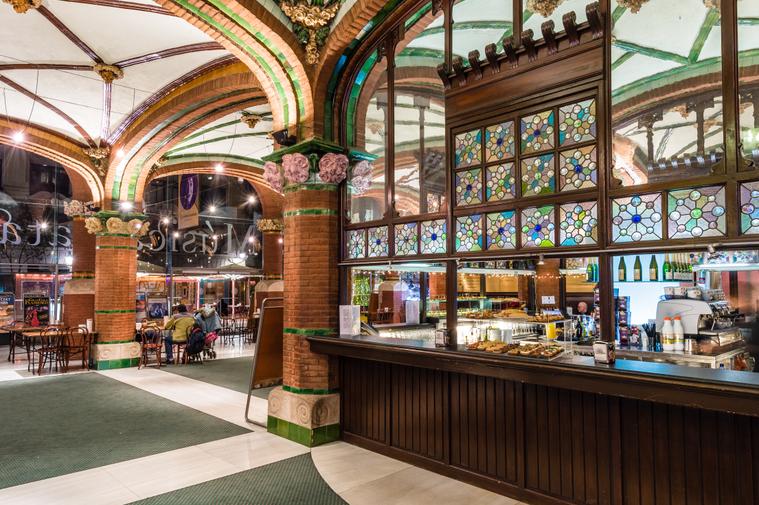
Palau Foyer
Now home to a café-restaurant, this space retains striking architectural features, including brick arches decorated with ceramic detailing.