Beyond Gaudí: Other Gems of Modernisme in Barcelona

There is no doubt about the genius of Antoni Gaudí or the enormous mark that the celebrated architect left on Barcelona’s urban landscape. However, the city is also home to an extraordinary collection of equally impressive Modernist buildings, designed by other architects who were Gaudí’s contemporaries and who also contributed to the development of this artistic and cultural movement.
Internationally, Gaudí is probably the most widely recognised figure of Catalan Modernisme. But Barcelona also preserves the legacy of great names such as Lluís Domènech i Montaner, Josep Puig i Cadafalch, Enric Sagnier, Josep Maria Jujol and Antoni Maria Gallissà, among many others, who designed works of great architectural value throughout the city.
Below, we suggest a tour of some of the finest examples of Modernist architecture in Barcelona beyond Gaudí. An itinerary that takes in spectacular façades, full of detail and symbolism, where every building expresses its own unique identity.
Modernist architecture in Barcelona
Palau de la Música Catalana
Considered the masterpiece of Lluís Domènech i Montaner and a temple of music in the historic heart of Barcelona, the Palau de la Música Catalana is also one of the city’s most important examples of Catalan Modernisme. Declared a UNESCO World Heritage Site, the spectacular concert hall features a façade dedicated to music, a stained-glass skylight presided over by an inverted sun and a monumental stage surrounded by muses, who forever accompany the musicians, presided over by the figures of Anselm Clavé and Beethoven. An exaltation of music and culture that can be explored on both self-guided and guided visits.
Recinte Modernista de l’Hospital de Sant Pau
Beyond private residences and public buildings, Catalan Modernisme also extended to institutions such as hospitals. Also designed by Domènech i Montaner, one of the leading architects of the period, the Hospital de Sant Pau was revolutionary in placing patients’ wellbeing at the heart of its design. With beautiful gardens and pavilions, the project combined functionality, natural light and spaces designed to promote the recovery of those admitted.
To explore Domènech i Montaner’s legacy in greater depth, you can combine your visit to the Palau de la Música Catalana with a tour of the Recinte Modernista de Sant Pau and discover two masterpieces declared UNESCO World Heritage Sites.
Casa Amatller
The work of another celebrated Catalan Modernist architect, Josep Puig i Cadafalch, Casa Amatller is one of the most distinctive façades on Passeig de Gràcia, although it is often overshadowed by its neighbour, Casa Batlló. Its stepped gable, inspired by Flemish architecture, stands out, as does the wealth of ornaments and allegorical motifs referring to the family who owned the house.
Inside, the mosaic floors designed by Mario Maragliano also stand out. He was one of the period’s leading mosaic artists and was responsible for reintroducing Roman mosaic techniques to Catalan Modernisme.
To learn more about the role played by the artisans who helped make the great Modernist works possible, at the Palau de la Música Catalana you can discover them through the thematic visit The Heroes Behind the Construction of the Palau, dedicated specifically to these creators.
Casa de les Punxes
Also designed by Puig i Cadafalch, Casa Terradas gets its popular name from the distinctive pointed shape of its six towers, which give it a particular Gothic and medieval appearance. It also incorporates numerous elements characteristic of Catalan Modernisme, including rich sculptural ornamentation and a depiction of Sant Jordi (Saint George), the patron saint of Catalonia.
Casa Comalat
One of Barcelona’s most surprising — and also lesser-known — Modernist buildings is this residence designed by Salvador Valeri i Pupurull. The house has two completely different façades: one on Avinguda Diagonal, more austere and elegant, and the one on Carrer Còrsega, highly colourful and filled with organic elements.
Casa Planells
Designed by Josep Maria Jujol and completed in 1924, Casa Planells is difficult to classify. It is often considered the last great Modernist building constructed in Barcelona, but in reality it belongs to a period of transition in which Catalan Modernisme was already coexisting with new architectural languages. Its undulating shape makes the most of a narrow plot measuring just 80 m2. The house was restored in 2012 and painted a distinctive yellow, making it one of the most singular buildings on Avinguda Diagonal.
Casa Pia Batlló
Built by Josep Vilaseca, this house on Rambla Catalunya stands out for its dragon motifs, which appear throughout the façade, both in the stone reliefs and in the wrought iron of the balconies. Other characteristic elements of Catalan Modernisme can also be found here, including ceramics, glass and rich ornamentation inspired by nature.
Casa Lleó Morera
Neighbouring Casa Amatller and Casa Batlló, it forms part of the famous “Block of Discord”, a block of Modernist houses where some of the leading architects of the period competed to create the most spectacular façades on Passeig de Gràcia. Designed by Domènech i Montaner, it features, as does the Palau de la Música Catalana, outstanding work by more than 40 artisans, sculptors, stained-glass artists and ceramicists, who created an extraordinary wealth of decorative detail.
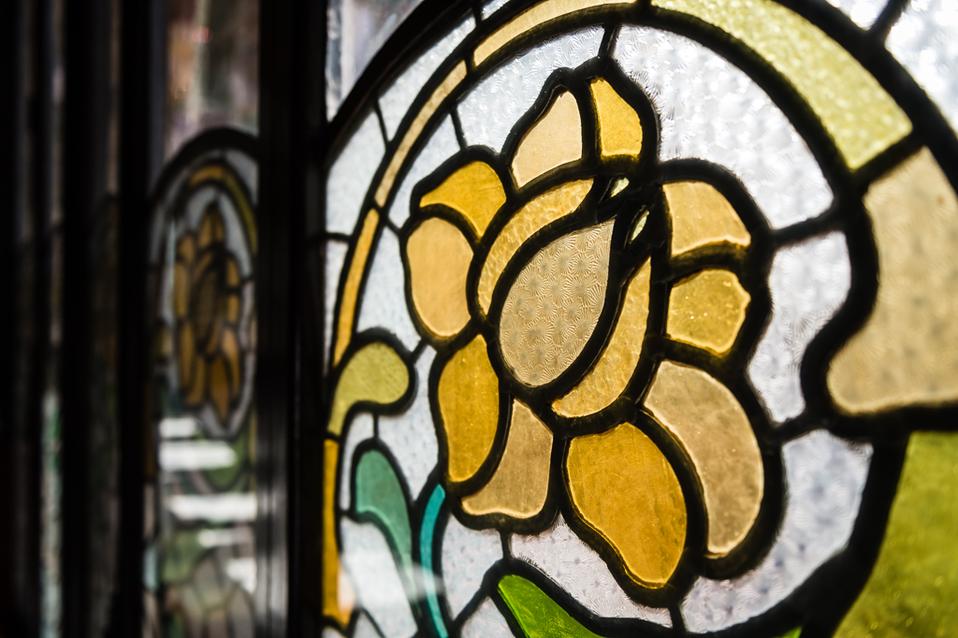
Among them was Rigalt i Granell, the company that helped drive the industrialisation of stained-glass production and created the stained-glass windows at Casa Lleó Morera, as well as the spectacular inverted skylight crowning the Palau’s concert hall.
Casa Serra
Designed by Puig i Cadafalch at the top of Rambla Catalunya, Casa Serra features a Gothic-inspired façade and a pointed tower at the corner. Each window is adorned with a bust of a prominent figure from the world of the arts, including Cervantes, Wagner and Velázquez. It is currently the headquarters of the Diputació de Barcelona, which extended the building while faithfully respecting the original work.
Casa Fuster
Now a luxury hotel of the same name, Casa Fuster by Domènech i Montaner was built at the top of Passeig de Gràcia and is one of the most elegant buildings of Barcelona’s Modernisme. Its ground floor features a Viennese café where the city’s bourgeoisie used to gather and which attracted prominent figures from the cultural world, including Salvador Espriu.
Casa Macaya
A virtually unknown gem by Puig i Cadafalch, Casa Macaya is distinguished by the striking white colour of its façade, as well as its ochre sgraffito decoration and main-floor balcony. One curiosity is the figure of a cyclist carved into a capital. According to tradition, it was a tribute by the sculptor to Puig i Cadafalch, who at the time travelled by bicycle between the Casa Macaya and Casa Amatller construction sites.
Palau del Baró de Quadras
Another building by the prolific Puig i Cadafalch, the palace combines a Gothic-inspired façade on Avinguda Diagonal with another featuring a more distinctly Modernist language on Carrer Rosselló, demonstrating the architect’s creative versatility. Particularly noteworthy is the sculptural work featuring ornaments depicting medieval figures.
A different perspective on Barcelona’s Modernisme
As you can see, Barcelona’s Modernist architecture is practically inexhaustible. Beyond Gaudí’s buildings, the city preserves an extraordinary heritage created by dozens of architects who interpreted the foundations of the movement through highly diverse architectural languages, but always with the same commitment to innovation and excellence.
Exploring these buildings means discovering a Barcelona that transformed itself into an extraordinary expression of identity and creativity. And among all these gems, the Palau de la Música Catalana is one of the most exceptional examples of this legacy: a unique space declared a UNESCO World Heritage Site, where architecture, decorative arts and a love of music come together.