The Palau de la Música Catalana, the only concert hall in the world recognised by UNESCO

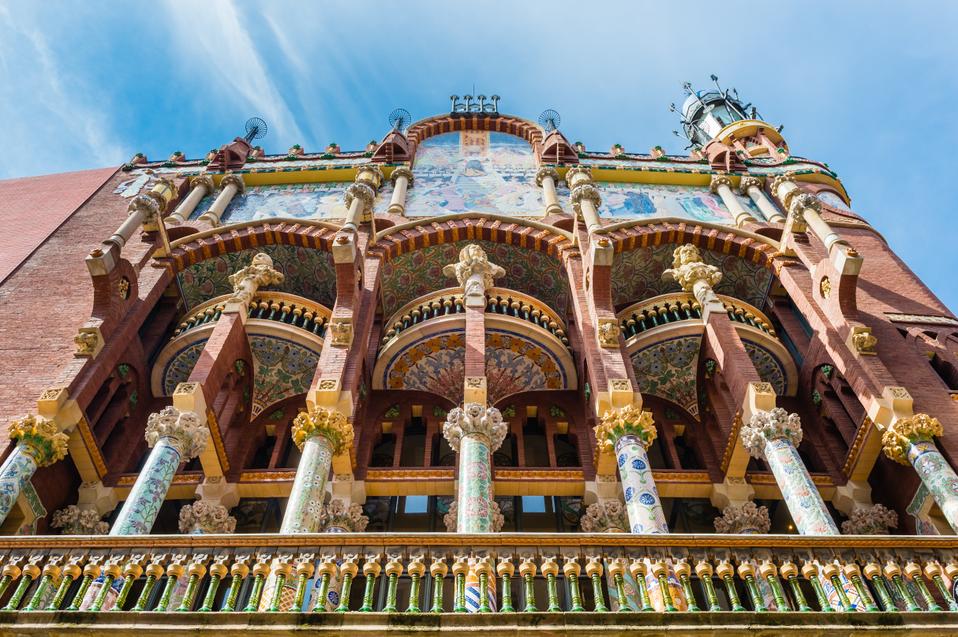
The Palau de la Música Catalana holds a unique place within Barcelona’s cultural heritage. Designed by the architect Lluís Domènech i Montaner and inaugurated in 1908, this concert hall is one of the finest expressions of the synthesis between architecture and applied arts. It is also one of the most representative works of Catalan Modernism.
Its international significance was consolidated in 1997, when it was inscribed on the UNESCO World Heritage List. With this recognition, the Palau became the only concert hall in the world to be declared a World Heritage Site, a distinction it still holds and which has placed it among Barcelona’s most visited buildings.
Concert hall and architectural heritage
The Palau is one of the few concert halls conceived as a complete architectural project that, more than a century after its construction, continues to operate fully as an auditorium. This continuity of use makes it an exceptional case on the international stage.
Domènech i Montaner conceived the Palau as the home of the Orfeó Català, a function it still fulfils today. The project responded to the ambition to create a total space dedicated to choral and symphonic music. The façade of the Palau, rich in musical references, acts as a visual prelude to what awaits visitors inside: an experience in which architecture and music come together.
The Palau’s Concert Hall stands out for its structural innovations and its profuse ornamentation, with masterfully crafted decorative elements made of ceramics and glass. The ingenious use of natural light, filtered through a large central stained-glass skylight of intricate detail, helps create a unique and almost magical atmosphere.
This interdisciplinary approach is one of the key reasons for the inclusion of the Palau de la Música Catalana on the UNESCO World Heritage List.
Why the Palau de la Música is a UNESCO World Heritage Site
In 1997, UNESCO recognised the Palau de la Música Catalana as “one of the finest contributions of the Catalan architect Lluís Domènech i Montaner, a specialist in Art Nouveau, to the architecture of Barcelona”.
The international organisation describes it as “an exuberant steel-framed structure, spacious and filled with light, decorated by a group of leading artists of the time”. It highlights its exceptional nature in terms of innovation, its special conception of space and the intelligent use of technologies developed during the Industrial Revolution, as well as its use of natural light, which it considers a “key factor in the enjoyment of the interior space”.
Its status as a World Heritage Site recognises not only the building’s aesthetic value, but also its continuity as an active centre for musical creation and performance. According to UNESCO, the Palau has “singularity, authenticity and beauty” and constitutes “an incomparable Modernist example of a public concert hall with universal symbolic, artistic and historical value”.
This recognition has helped establish the Palau as one of Barcelona’s most emblematic buildings and one of the great icons of Catalan Modernism.
The Palau, a living musical space
Beyond its architectural value, the Palau is a fully active concert hall that regularly hosts symphonic concerts, recitals, choral music, opera and contemporary proposals. Over time, its musical programme has maintained a balance between musical tradition and new artistic expressions.
With its excellent acoustics, the Palau has had the honour of hosting performances by some of the greatest performers in the history of music. Johann Strauss, Igor Stravinsky, Sergei Rachmaninoff and Arthur Rubinstein performed here, as did leading musicians connected to Catalan and Spanish culture, including Pau Casals, Enric Granados and Manuel de Falla.
Its continuous concert activity reinforces the Palau’s role as a living cultural infrastructure, unlike other heritage buildings that have become exclusively museum spaces. The building can be visited, but at the same time it continues to fulfil the cultural and musical mission for which it was conceived.
A visitable auditorium and UNESCO World Heritage Site
Today, the Palau de la Música can be discovered through various types of visit, including self-guided tours, guided tours, themed itineraries and interactive activities. Visitors can access some of the building’s most important spaces, such as the Concert Hall, the Orfeó Català Rehearsal Room, the Lluís Millet Hall and the Foyer.
Visiting the Palau is a unique opportunity to discover the only concert hall in the world declared a UNESCO World Heritage Site and one of the finest examples of Modernist architecture in Barcelona. It is a manifestation of human creative genius that combines artistic excellence, architectural innovation and extraordinary historical and symbolic value.